My ultimate goal is to harvest Maple, Oak, and Ash on my property this fall, but I'm concerned about cross-contamination due to a surplus of neighboring Black Locust trees, which are poisonous (although not necessarily to isopods).
Common advice suggests offering hardwood leaves and avoiding plants with chemical defenses. I have not found evidence of Black Locust leaves being offered to isopods in the hobby, either in my search of social media groups or in shops offering botanicals.
So it's experiment time.
I'll post my "research," thoughts, and testing here.
(If safe, the leaves are nutritious and have a high protein content (13-20%), comparable to Kudzu, which is worth considering. Will they even like it? First things first.)
Black Locust (Robinia pseudoacacia) is a hardwood tree in the legume family native to North America and introduced/naturalized/invasive globally. It's bark, seeds, and leaves contain toxalbumins (robinin, robin, phasin).
It is toxic when eaten by humans, though poisoning is extremely rare, with only one reported case in the US the last 100 years as of a case study in 2004 (1). Parts of the tree are used in the traditional medicine culture of several Indigenous American peoples. (2) Skin contact will not cause systemic poisoning and dermatitis reactions are not typical (wash your hands, though). Puncture wounds from the thorns can be exacerbated by the plant's toxins.
Black Locust is especially lethal to horses and of questionable safety for cattle and chickens, but it has been used as livestock feed in East Asia and is also used in modern silvopasture systems where ruminants can graze on the leaves and new growth shoots (2), the later of which contain the highest concentration of toxins (3).
It's seeds are a minor food source for several North American birds, and the leaves are commonly eaten by deer.
A USDA report (2) cites "Medzihorský et al.’s (2022) literature review documented 454
herbivorous arthropod species feeding on black locust worldwide." It is commonly visited by bees (the resulting "Acacia Honey", as well as the flowers, are safely eaten by humans).
ISOPODS:
In terms of isopods and Black Locust trees, the only reference of any kind I could find relating one to the other was a promising study (4) investigating populations of isopods in Hungary between 1995 and 2011.
The study focuses on Black Locust tree farms where the tree represents a monoculture, thus making it the primary/only leaf litter available. 17 isopod species were found across 27 plantations, most commonly Armadillidium vulgare and Porcellium collicola. The warm, dry habitat of these plantations was suggested to be the cause of being populated largely by generalist species, with other species expected to have wandered in from surrounding native forests. No reference is made to toxicity. Sounds good.
TINFOIL HAT: YELLOW?
Many of the insect species that feed on Black Locust trees feature vivid yellow, orange, and red colors:
Black Locust Bug
Locust Borer
Locust Twig Borer
Locust Leaf Miner
Black Locust Aphid
Red Humped caterpillar (generalist)
Not sure if this is aposematism or if sequestering toxalbumins is a thing. At very least their diet is conducive to vivid coloration. Something to consider in future.
Sources:
(1) https://pubmed.ncbi.nlm.nih.gov/15083944/
(2) https://plants.sc.egov.usda.gov/DocumentLibrary/plantguide/pdf/pg_ROPS.pdf
(3) https://poisonousplants.cvmbs.colostate.edu/plant/45
(4) https://www.researchgate.net/publication/236632613_Isopod_communities_of_Black_locust_Robinia_pseudoacacia_L_plantations_in_Transdanubia_Hungary
I'll be using P. pruinosus "Red Koi", since I have them on hand and they won't mind the mediocre moisture gradient of the early test bins as much.
Bins:
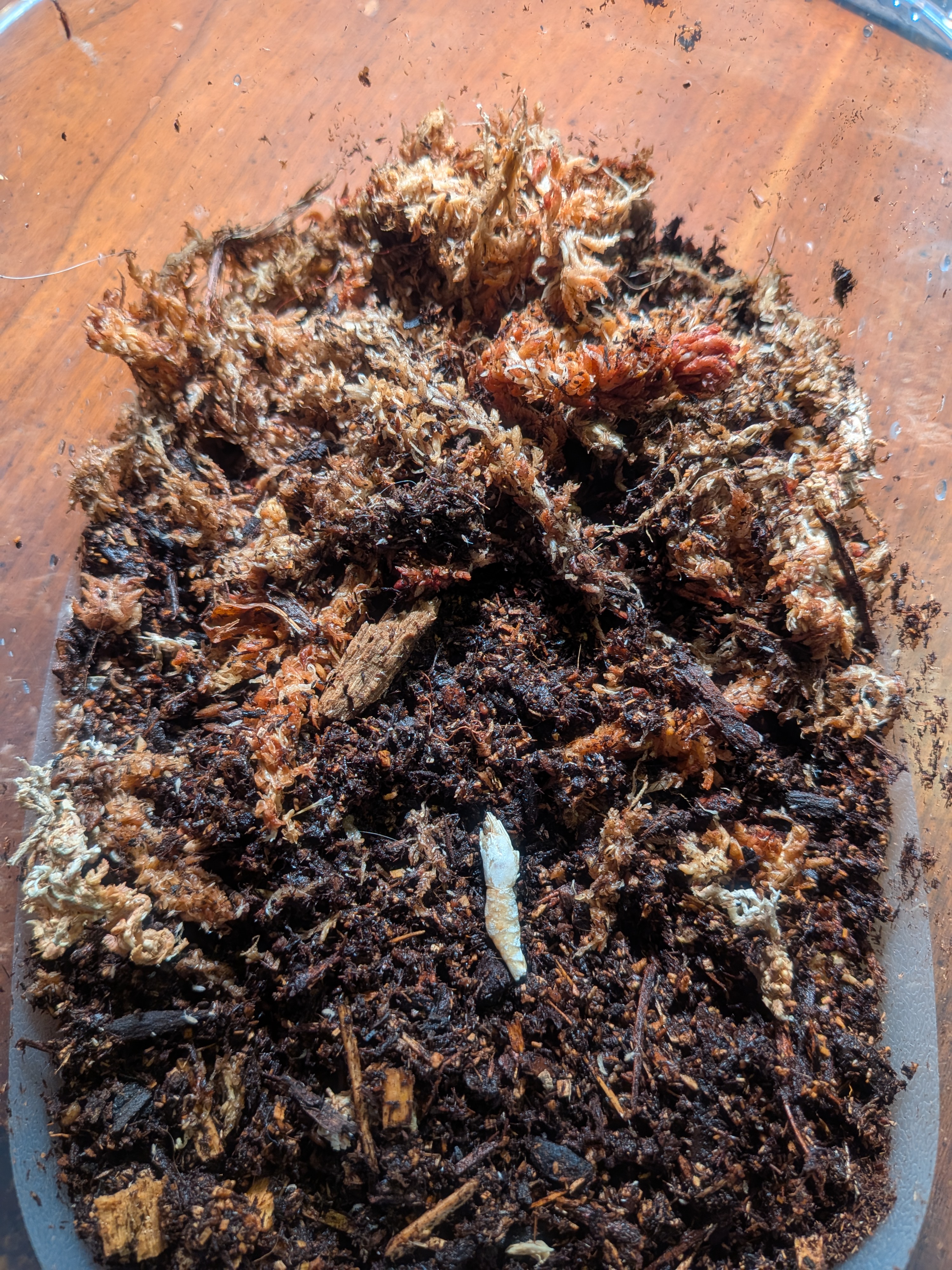
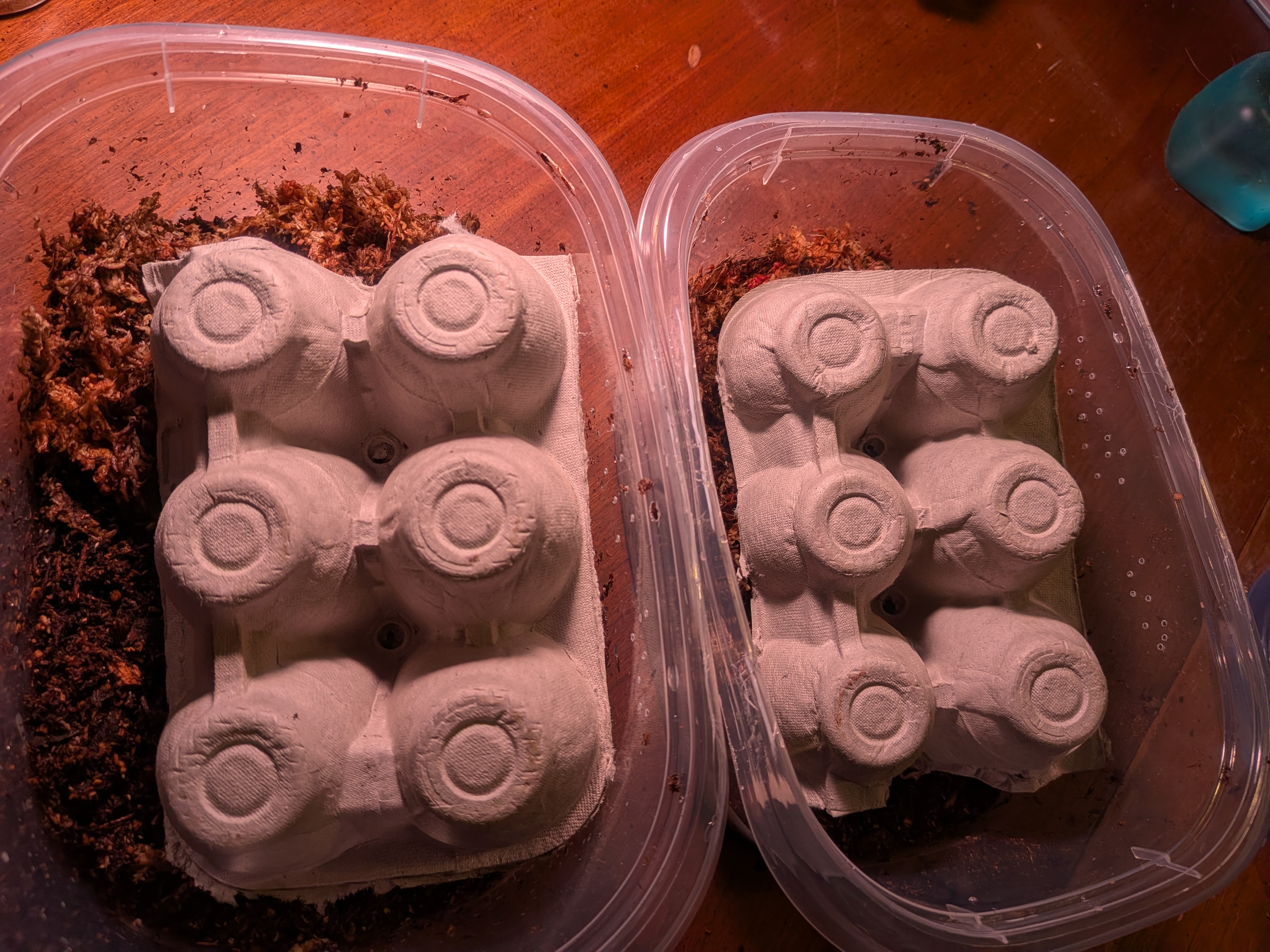
2 identical ~3qt plastic tubs with vent holes and snap-on lids.
Isopods:
10x P. Pruinosus per bin. Confirm 2 gravid females per bin.
Substrate:
Fir and sphagnum peat moss. Inedible to promote eating the test leaves. Tap water with BTI (the usual).
Amenities:
Sphagnum moss hydration station, tropical springtails, egg crate hides. The springtails will help with toxicity testing, but TBH I added them out of habit.
I'll let these sit while the leaves are drying and add the isopods in a week or two (springtails have been given snacks).
I'm planning to have them in here for 2-4 weeks after which I'll move them up to a 6qt with proper substrate for longer term testing if all goes well.
I'd like to do an additional test in the fall once the leaves drop naturally, but I'm working under the assumption that the toxins will be most potent prior to abscission and decomposition (Edit: this is a bad assumption. Some leaves become more toxic in the wilting stage. Adjust accordingly.) After I find out if it's edible, we'll see if it's healthy and tasty. Right now my primary concern is the safety of other hardwood leaf litter being contaminated by windblown Black Locust leaves.
BIN 1: "Fresh" Leaves
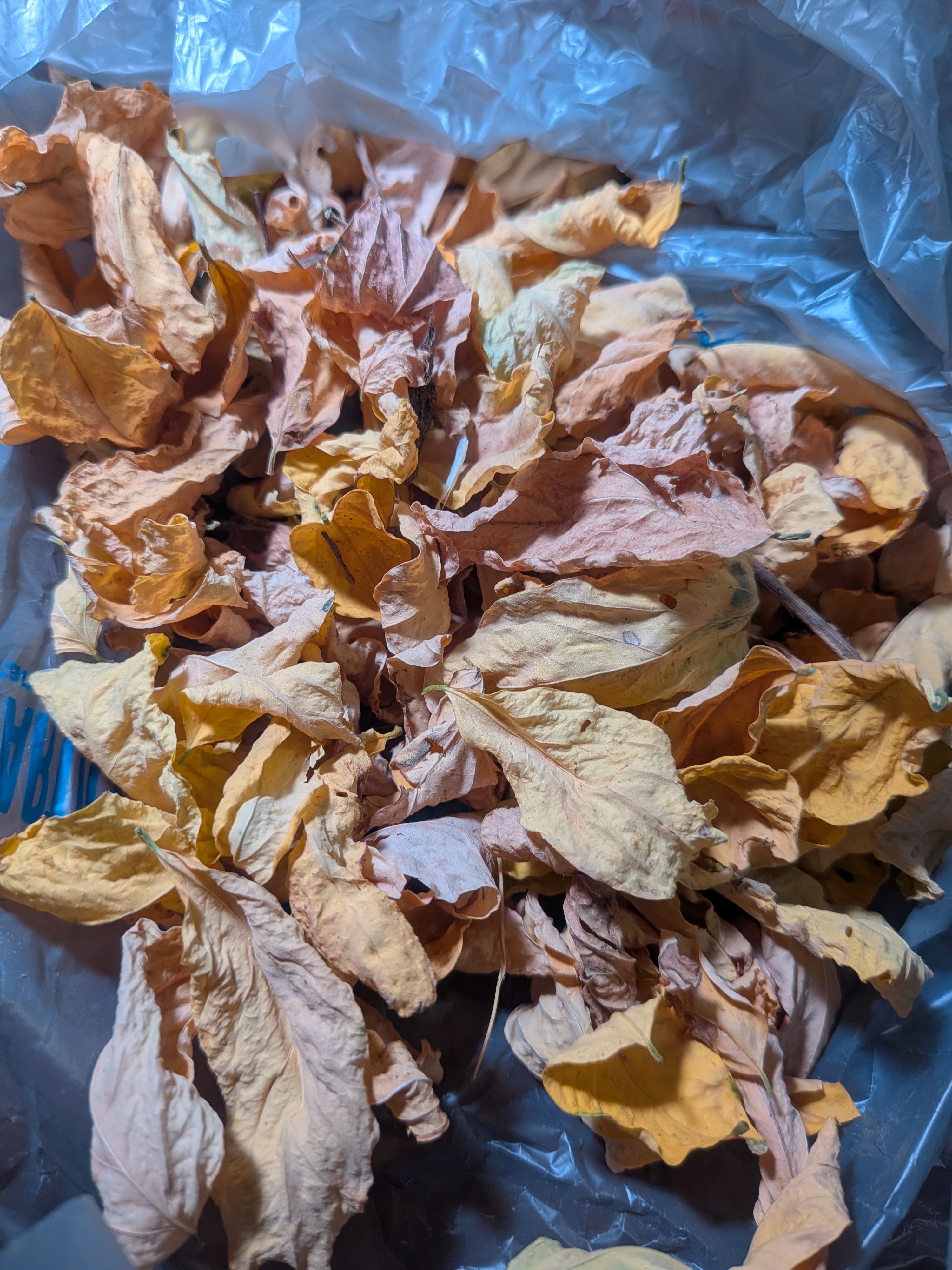
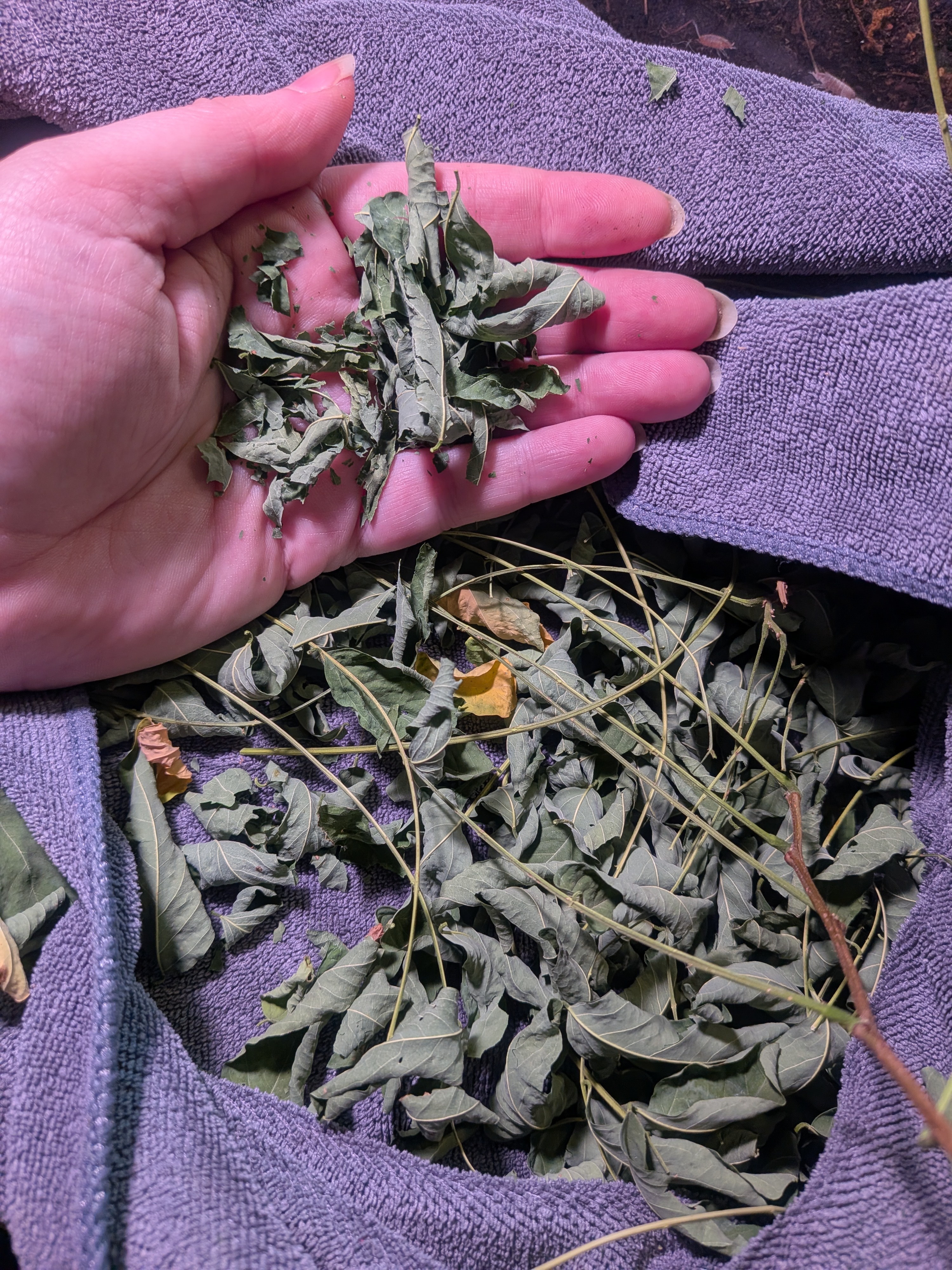
Plucked from the tree and air-dried for 1-2 weeks.
BIN 2: Last Year's Leftovers
Old leaves from previous years from That Spot In the Yard I Never Rake.
Right now is just a waiting game for drying out the fresh leaves. I don't want to use the oven because the toxins may break down with heat. I usually soak or freeze my leaves but might leave them as-is for less variables.
Will update when I put in the pods.
Mini bin with sacrificial shrimp treat.The modesty of the test subjects has been taken into consideration.
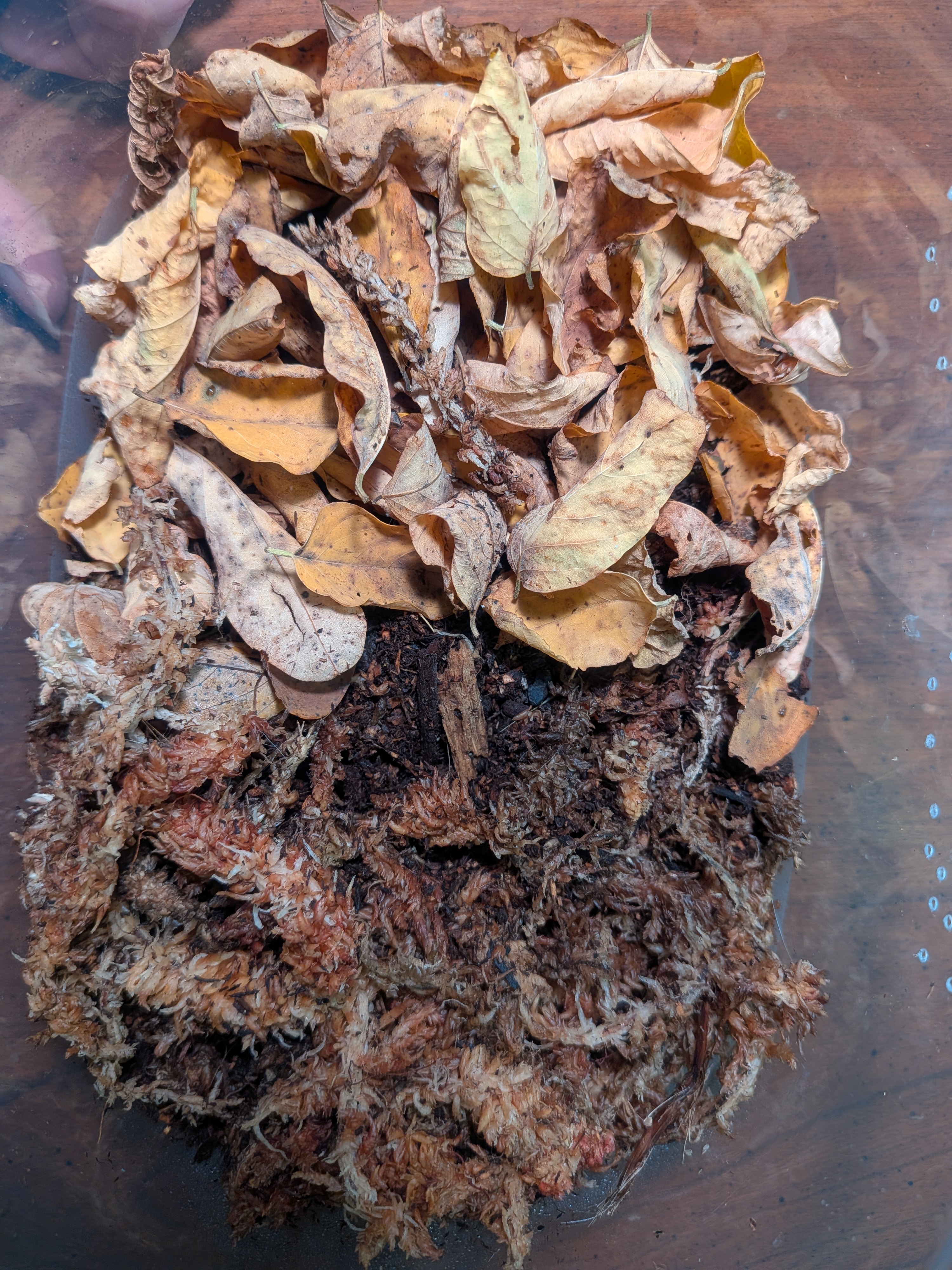
I decided to get "BIN 2: Last Year's Leftovers" started while the fresh leaves dry.
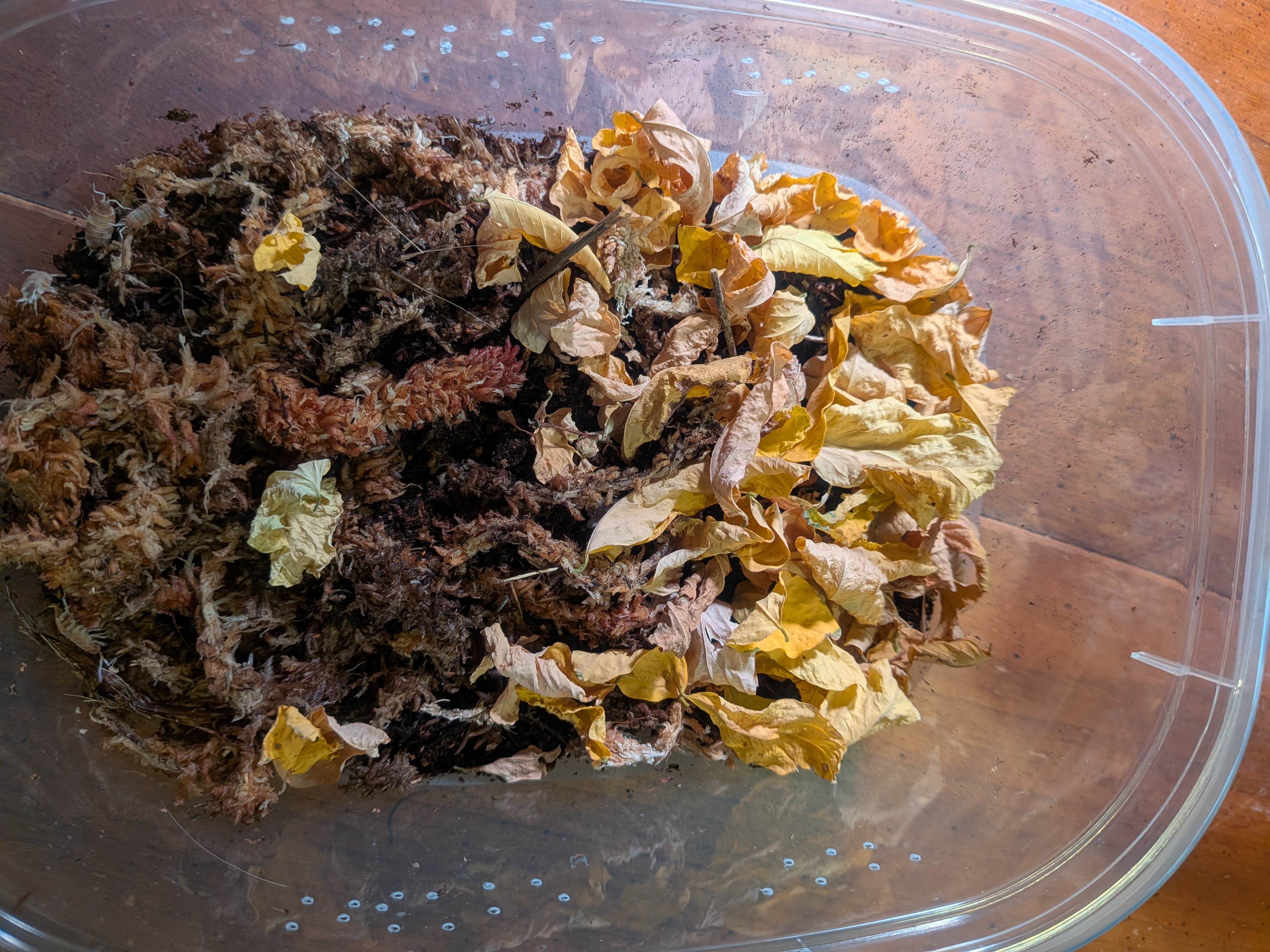
These are probably not from last fall, as they are quite delicate and probably wouldn't last this long. The leaves are small, delicate, papery and yellow, 1-2 inches long. They are well-dried but not much decayed due to the lack of rain in our summer climate.
10 P. pruinosus were added, including 2 confirmed gravid females.
A relatively small amount of leaf litter was added to Bin 2 so I could easily check up on the population. Sprayed with water.
These won't hold up long under decay.Into the soup.
BIN 2, Day 2 check in.
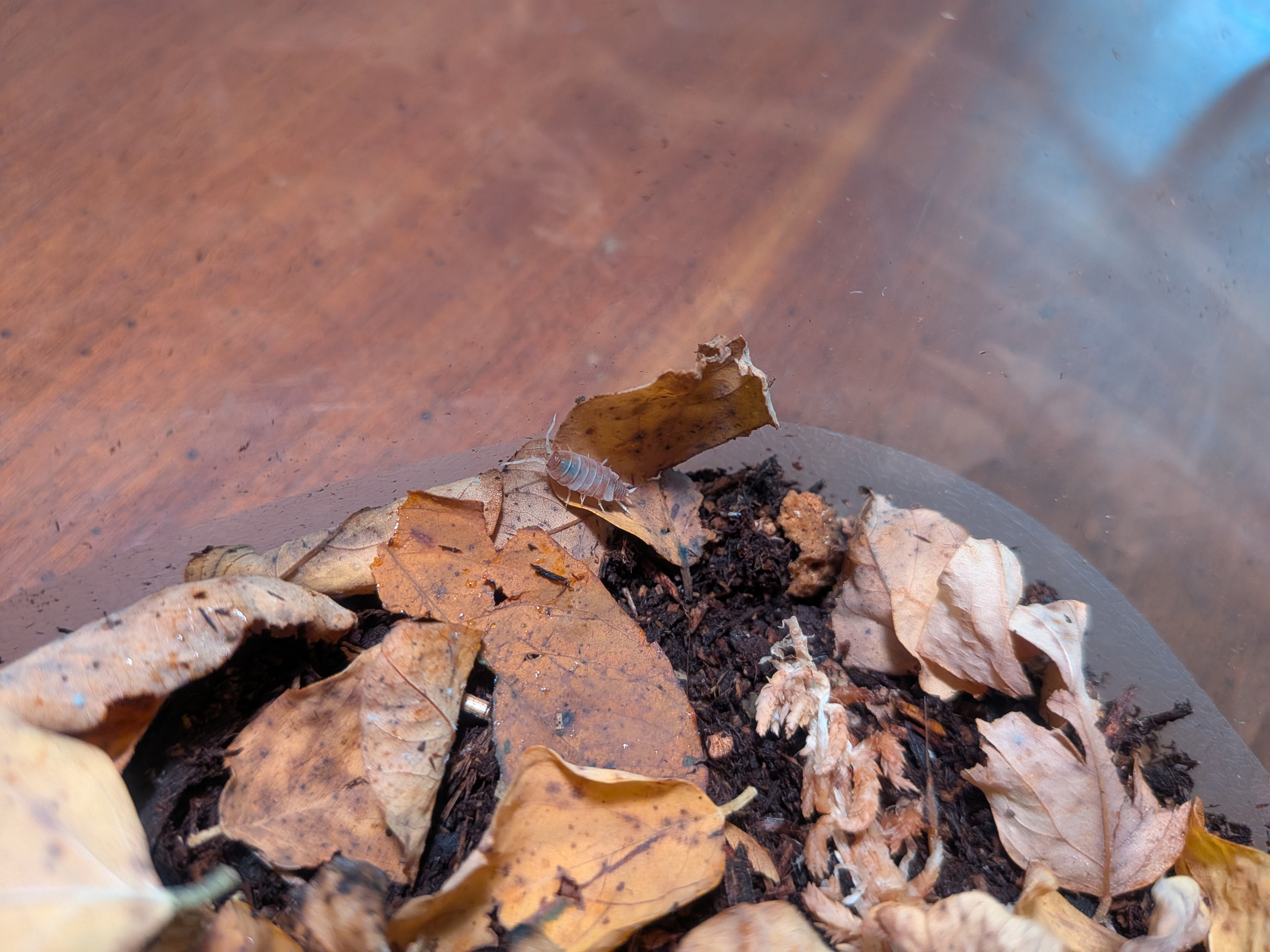
9/10 of the pods were deep in the egg crates and away from the leaves. Not sure if because they're avoiding them, or because they just like the crates. I usually use cork bark.
10th pod was in the leaves and had given birth. Saw a few mancae, acting as expected.
BIN 2 (old leaves), DAY 3 Check-in
Decided to remove the egg crate hide last night; I wanted to be sure they weren't eating it, and also that they were being exposed to the black locust leaves as much as possible.
So far, they aren't showing any aversion to the leaves, preferring to hide under them rather than the sphagnum moss on the moist side. No signs of distress in adults or mancae.
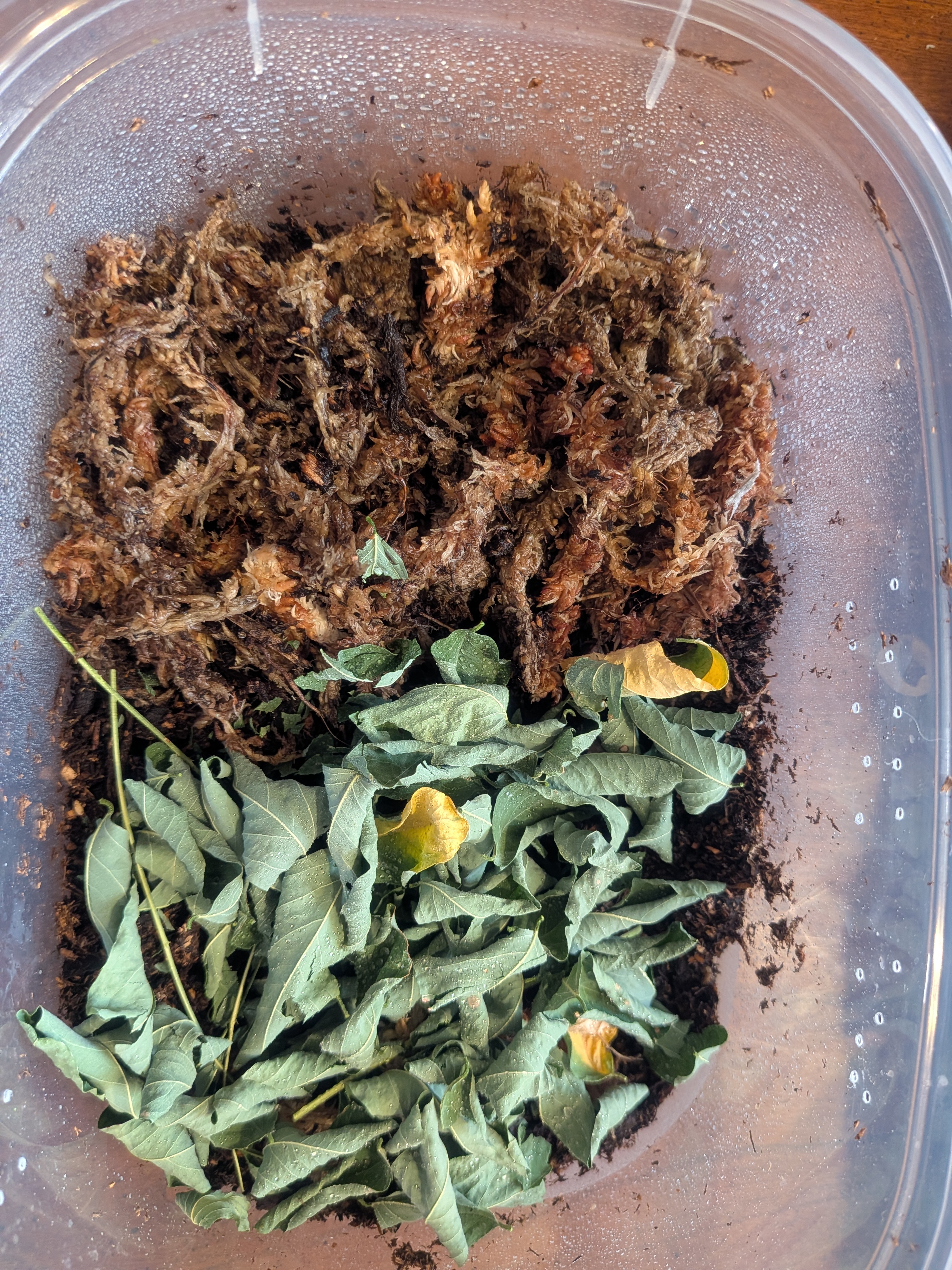
BIN 1, DAY 1: New Setup
This bin was set up using freshly picked black locust leaves that have been air dried in the sun for 3 days. They are crisp and crumble under light touch. I don't typically offer "fresh" leaves, but in the interest of toxicity testing, I wanted to rule out the potential danger of more freshly fallen leaves. Lightly sprayed with tap water.
10 P. pruinosus (including 2 confirmed gravid females) were added to the bin, and then a layer of this fresh leaf litter was introduced.
No egg crate was added.
BIN 2: In my research on BL Toxicity, I kept running into cases of kids eating this tree. I now understand why, as these leaves smell like delicious fruit leather.BIN 2: the isopods have no aversion to the leaves, preferring them to the sphagnum moss.FRESH BLACK LOCUST LEAVES: air dried for 3 daysBIN 1: Newly set up
BIN 1: NEW LEAVES, DAY 3
One of the females dropped her mancae last night. Seem to be doing well and they do not avoid the leaves.
No signs of distress on adults. They also show no aversion to the leaves
Adding dried leaves and spraying with waterrehydrated them almost to a fresh state. #idontknowwhatiwasexpecting Regardless, they are eating them if the greenish digestive tract is any indication. Will switch to more suitably rotted leaves after a bit more observation.
BIN 2: OLD LEAVES, DAY 5
Adults and babies still doing well.
Leaves have started to mold/actively decompose. My outdoor climate is very dry with almost no rain in 2 months. Leaves were totally dry when gathered.
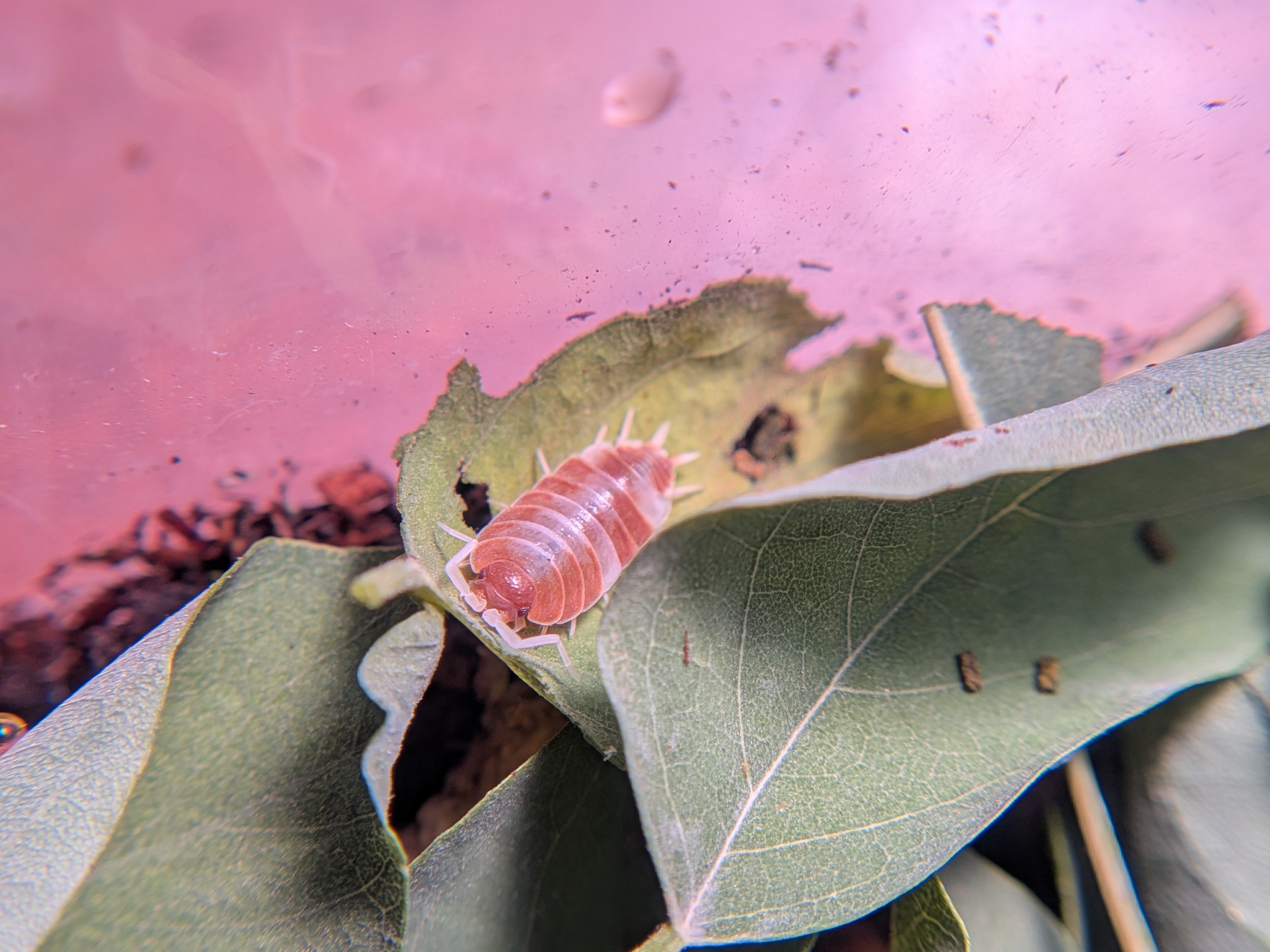
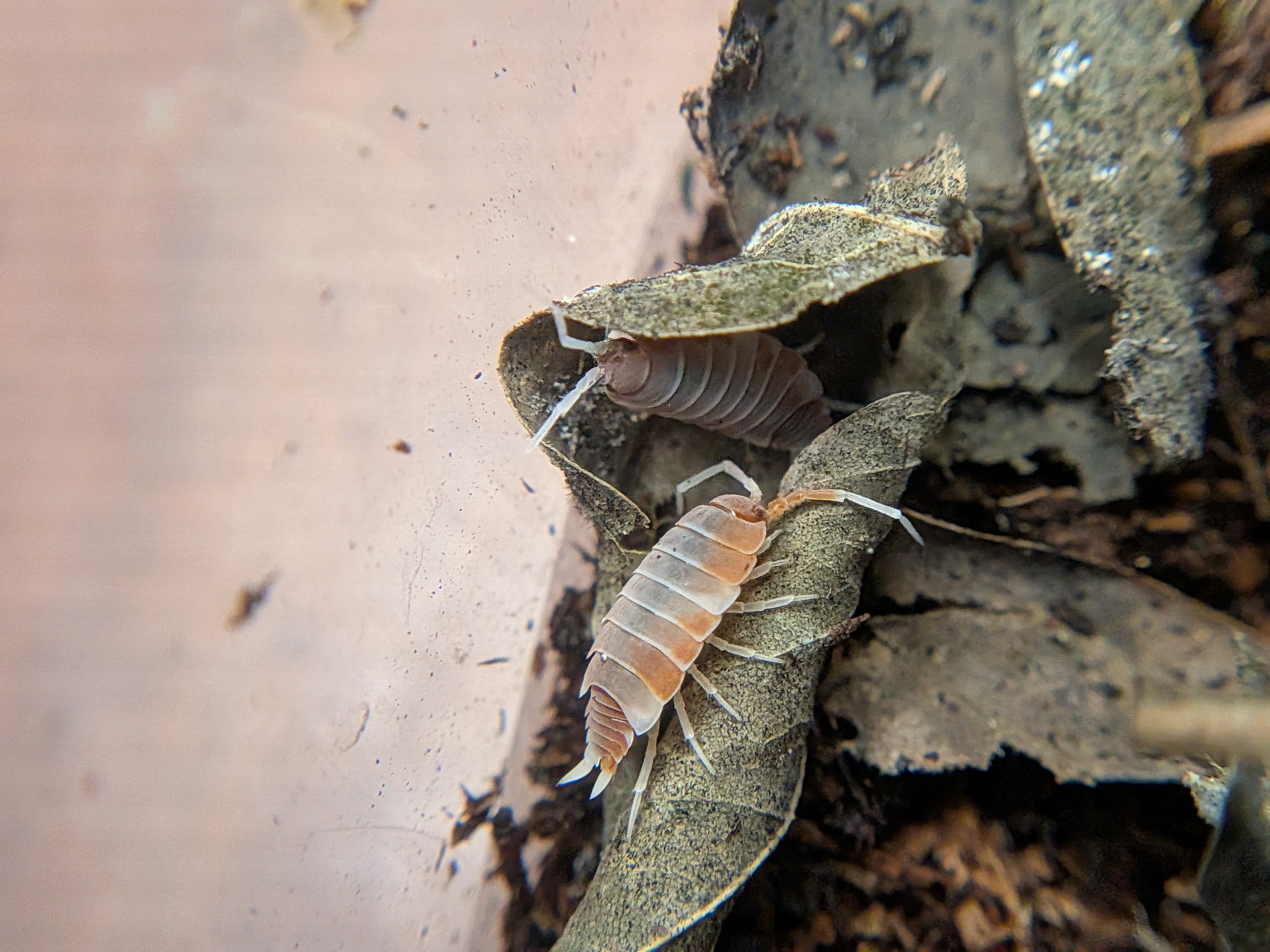
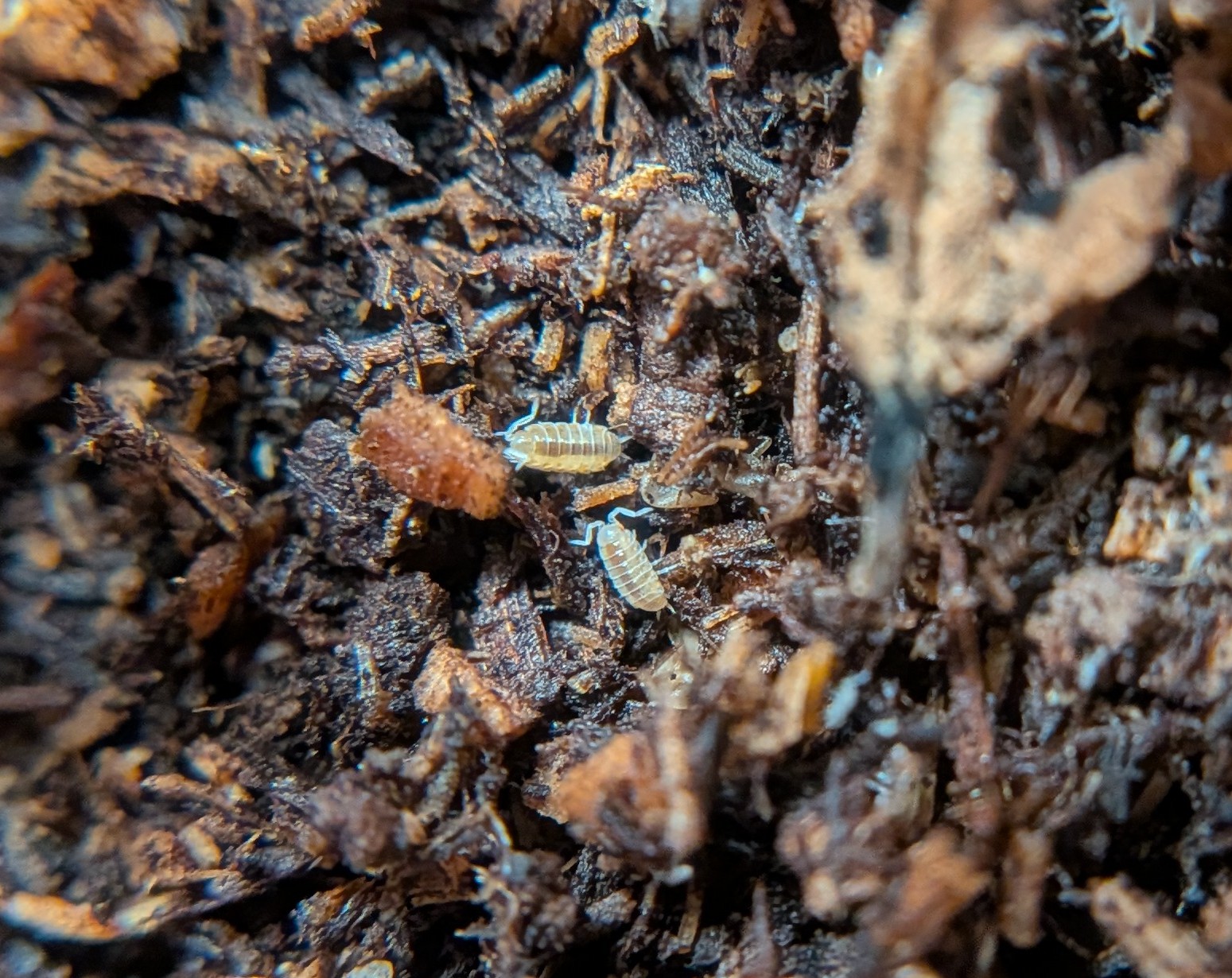
BIN 1: Fresh Minky BunBIN 1: Adults living in and eating leavesBIN 2: All's well
BIN 1: NEW LEAVES, DAY 6
6/10 adults were nesting in the sphagnum vs. under the cover of the black locust leaves. Unsure if because of moisture or avoidance.
Both adults and babies have been feeding on the fresh leaves as evidenced by their green stripes.
No deaths or distress observed. Plenty of babies in the leaves and on the soil. Springtail population remains vigorous.
BIN 2: OLD LEAVES, DAY 8
No changes here. Adults and babies eating and living in the leaf litter.
No deaths or distress observed. Plenty of babies in the leaves and on the soil. Springtail population remains vigorous.
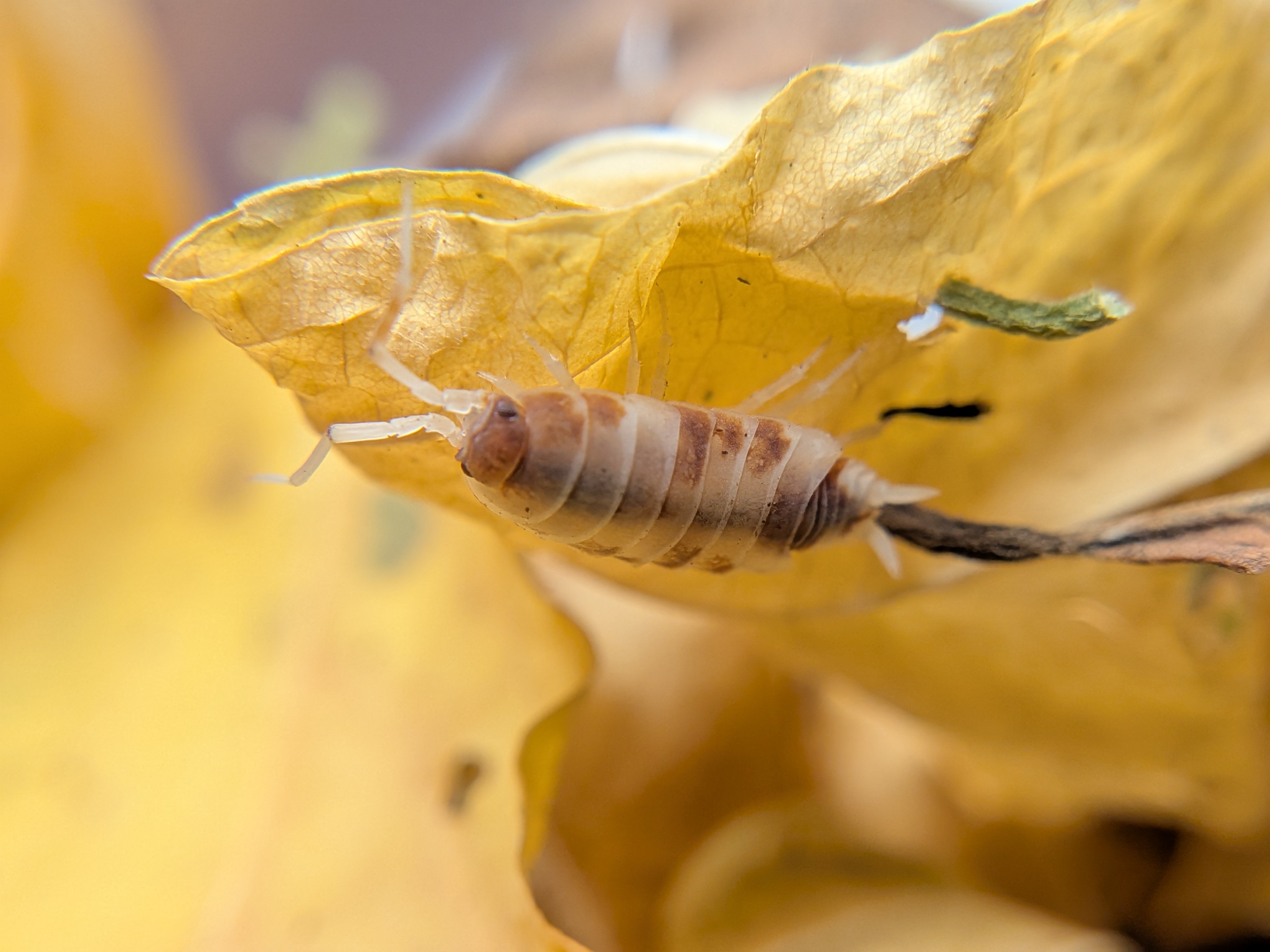
BIN 1: Eating fresh leaves, a temporary food sourceBIN 1: (extremely) little green men
BIN 1: NEW LEAVES, DAY 11
BIN 2: OLD LEAVES, DAY 13
No notable changes; populations of both bins seem healthy with no signs of distress.
Springtail populations growing, evidence of successful molts, and babies growing in both bins. I have not found any dead isopods.
BIN 1: NEW LEAVES, DAY 14
Despite starting this bin 2 days later, I saw more of the first brood of babies on the substrate surface. The second confirmed gravid female also gave birth at some point. Lots of baby activity on the surface.
Will have to see if this is a trend or just due to moisture, chance, etc.
BIN 2: OLD LEAVES, DAY 16
Added more leaves from the same supply collected on day of bin setup, as supply was being eaten.
The second confirmed gravid female in Bin 2 also has given birth. Baby activity on surface, but more hiding just under the top of the substrate than in Bin 1.
--------
A quick count confirmed at least 9/10 adults alive in both Bin 1 and Bin 2. All of the babies born on the first day of their bin's setup are starting to color up. Springtails reproducing as expected.
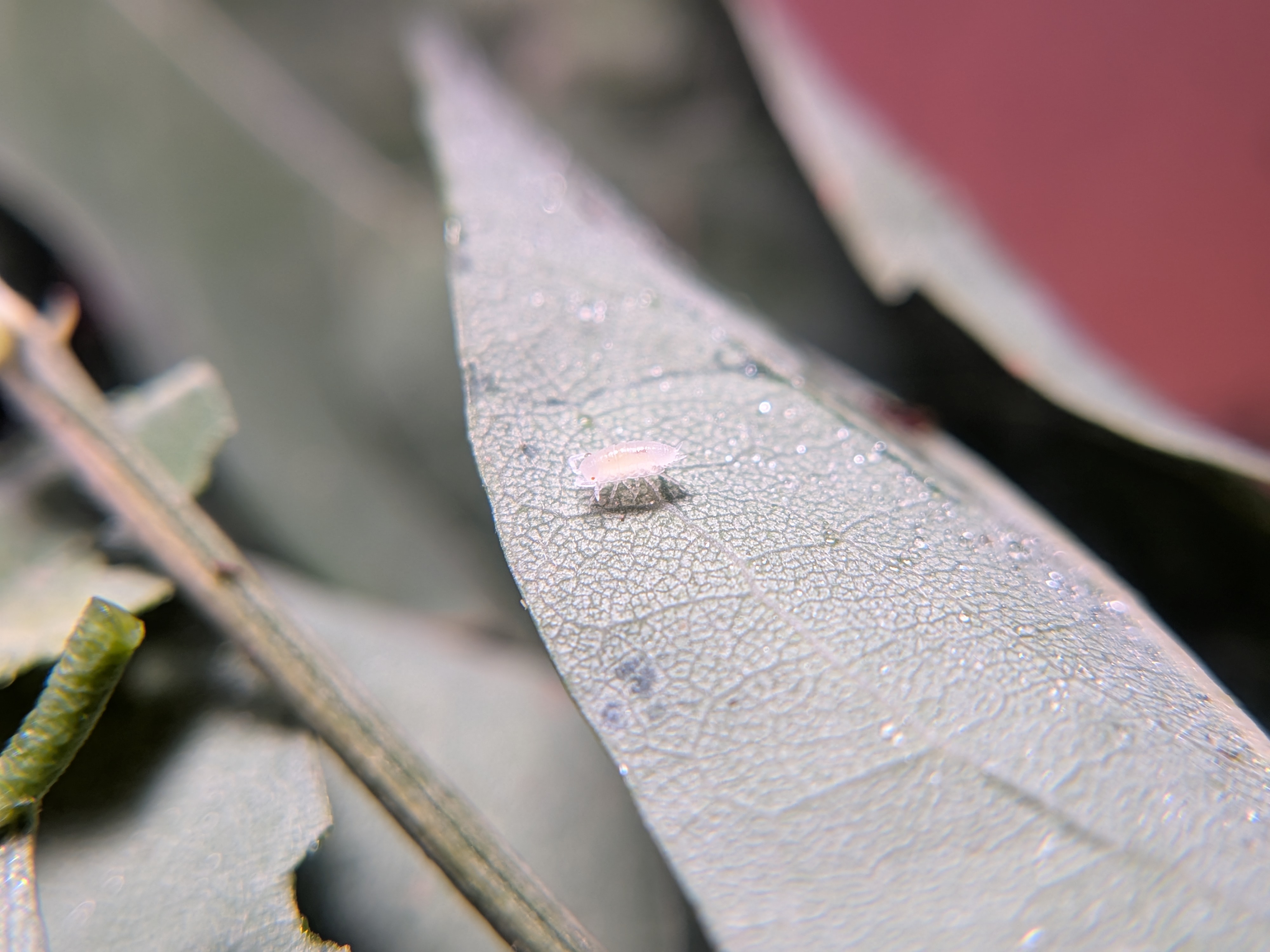
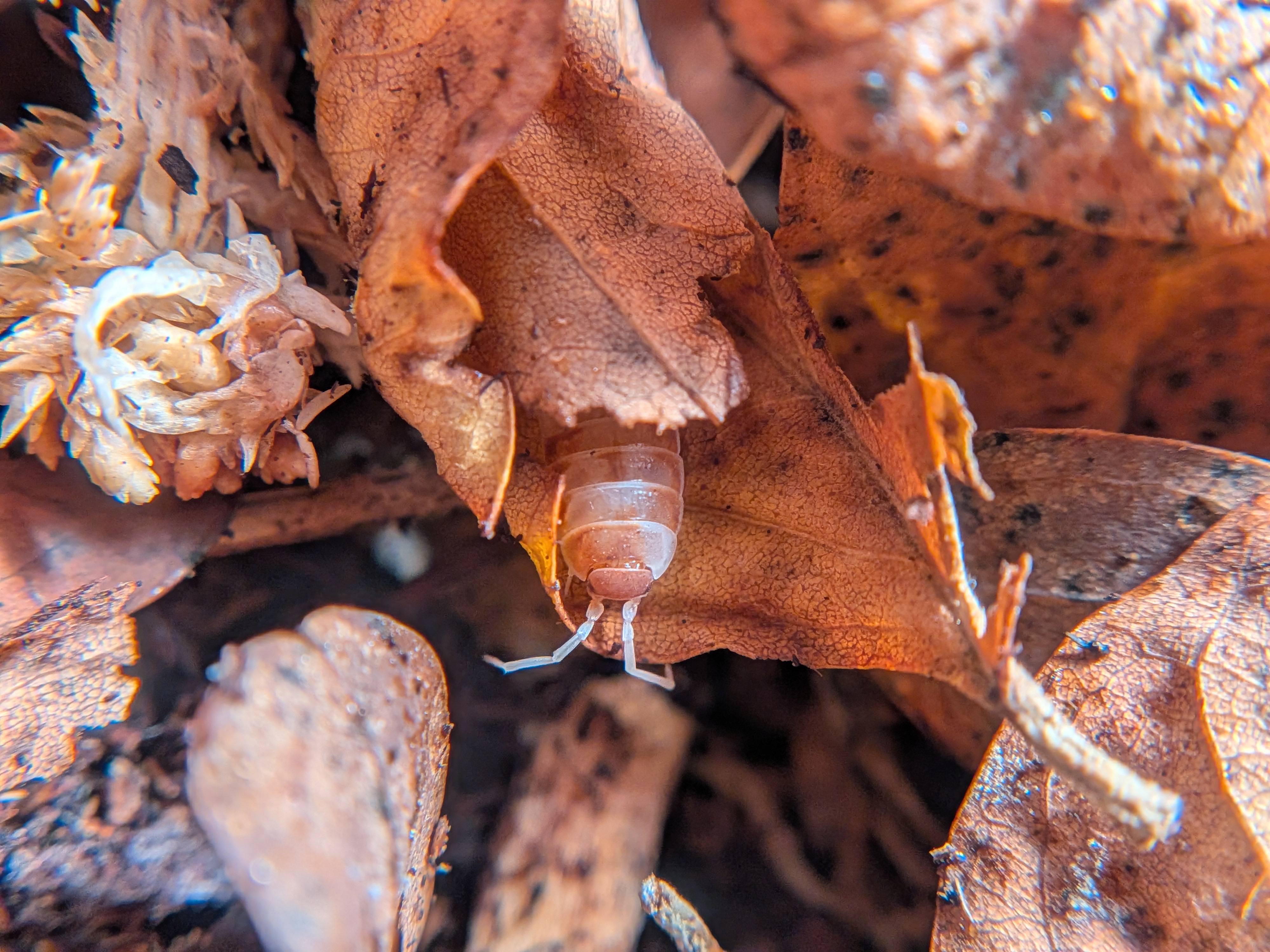
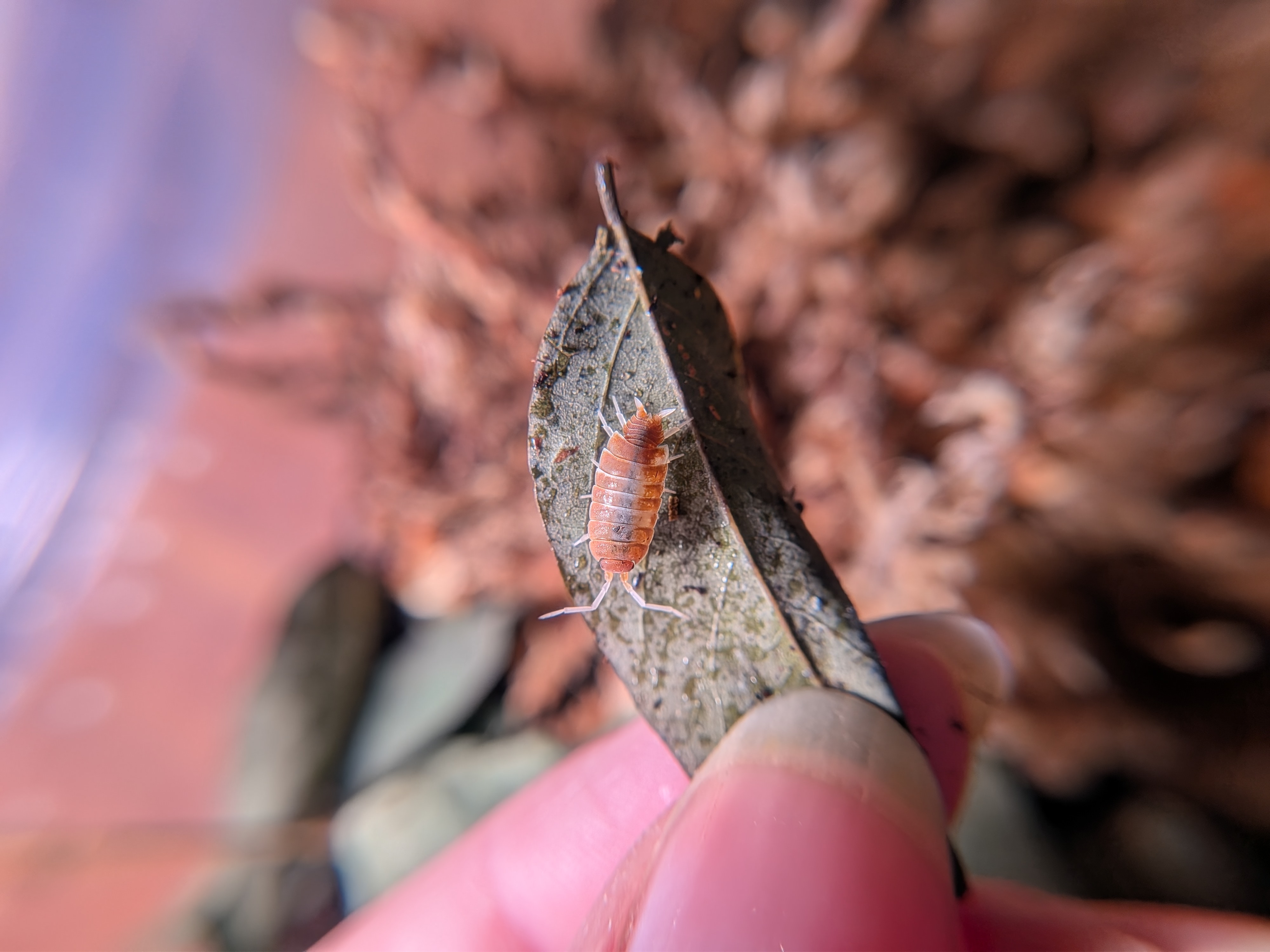
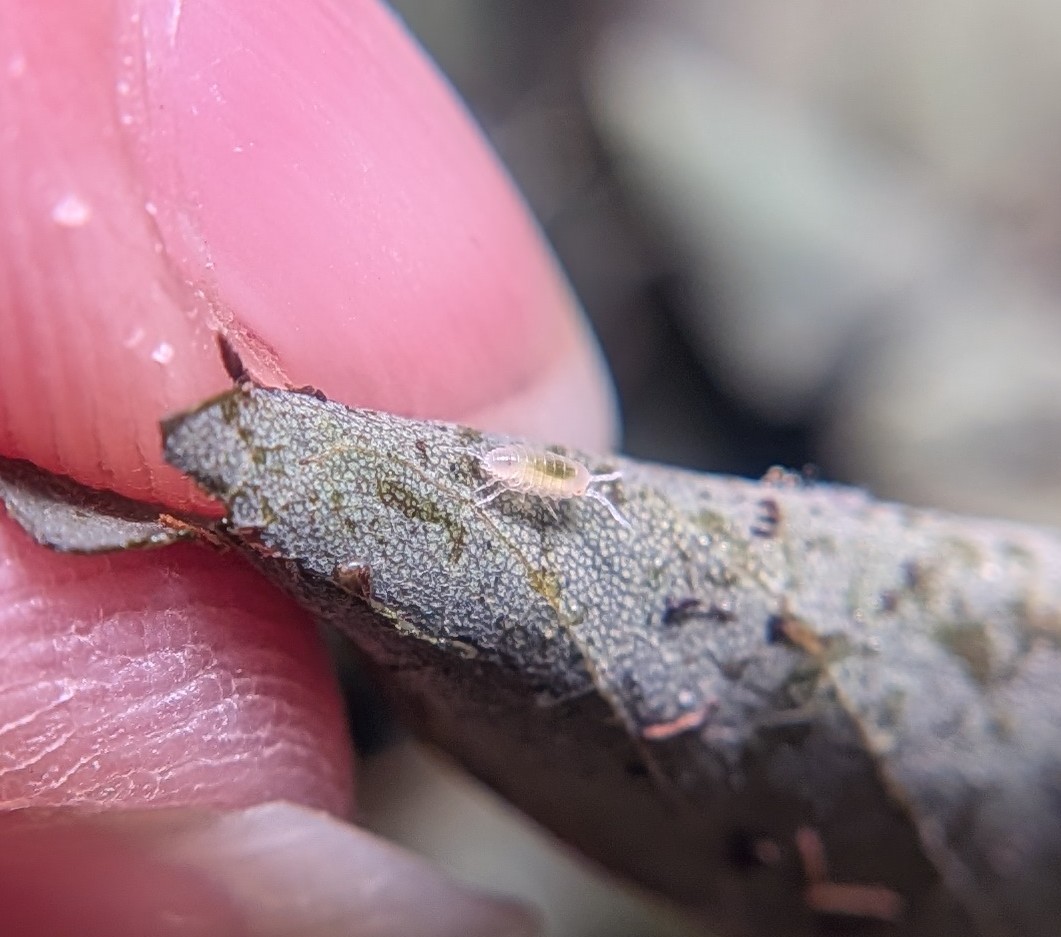
BIN 1: Adults readily eating and living in fresh leavesBIN 1: 2-week old juvenile shown with tropical white springtail adult. Young are showing color nicely.BIN 2: Adult sheltering in leaf litter as expectedBIN 2: 16-day old juveniles on substrate
BIN 1: NEW LEAVES, DAY 15
Shifting leaves and doing a quick count showed about a dozen babies on the substrate surface, including sizes from both the first and the second brood. A female was observed to be gravid.
BIN 2: OLD LEAVES, DAY 17
Moving the leaf litter also showed about a dozen babies, but they were entirely from the smaller second brood. Shifting through the moss, I was able to find 3 of the larger first brood.
Several females observed gravid.
Bin 2 leaves smell a bit unpleasant up close now.
-----
The lack of larger, older juveniles in the bin of old leaves is concerning.
I disturbed the moss and litter more than I would like and will leave them alone for a few days.
BIN 1: NEW LEAVES, DAY 19
All isopods seem healthy and active. Juveniles of multiple broods/ages were observed on the surface. The leaves are being "skeletonized."
BIN 2: OLD LEAVES, DAY 21
Starting to have concerns about this bin. Only young juveniles were observed on the surface. The older juveniles are absent, even after a quick search of the moss, leaves, and below the surface. There is less evidence of leaves being eaten than in Bin 1; less "skeletonized" leaves.
I haven't found and dead bodies. All adults seem healthy.
-----
Possible causes of Bin 2 issue:
- Something in the old leaves is toxic to developing young or causing failure to thrive.
- The isopods dislike the old leaves and are eating the non-nutritious substrate, which the young cannot survive.
- A predator was introduced in the leaf litter, which was not sterilized.
- The adults are cannibalizing the juveniles
- The juveniles are hiding more deeply
- A contaminant or damaging element was present in the old leaves (collected from the ground) vs. the new ones (cut from the branch).
A second round of testing with access to common hardwood leaves might help determine toxicity vs. preference.
Unlikely a few black locust leaves in contaminated/mixed in hardwood litter will cause colony deaths, but not shaping up to be an ideal feed.
-----
EDIT: After making the above notes, I did a detailed inventory of each bin. Both were significantly disturbed to about the same degree.
BIN 1: NEW LEAVES, DAY 19
All 10 adults confirmed still alive. Many young observed from multiple broods/sizes.
BIN 2: OLD LEAVES, DAY 21
8 live adults found, 1 missing, 1 freshly dead gravid female.
Possibly the missing individual escaped during my count. No corpse was found.
2 larger juveniles were found in the sphagnum and some very small young ones.
No predators were observed
No significant amount of additional young were found in the substrate.
I regret not setting up a control bin when I started this due to lack of available boxes, to no surprise. My experience with my main colony of Red Koi suggests the mortality in Bin 2 is abnormal; so many babies shouldn't be disappearing if the food is nutritious and/or safe.
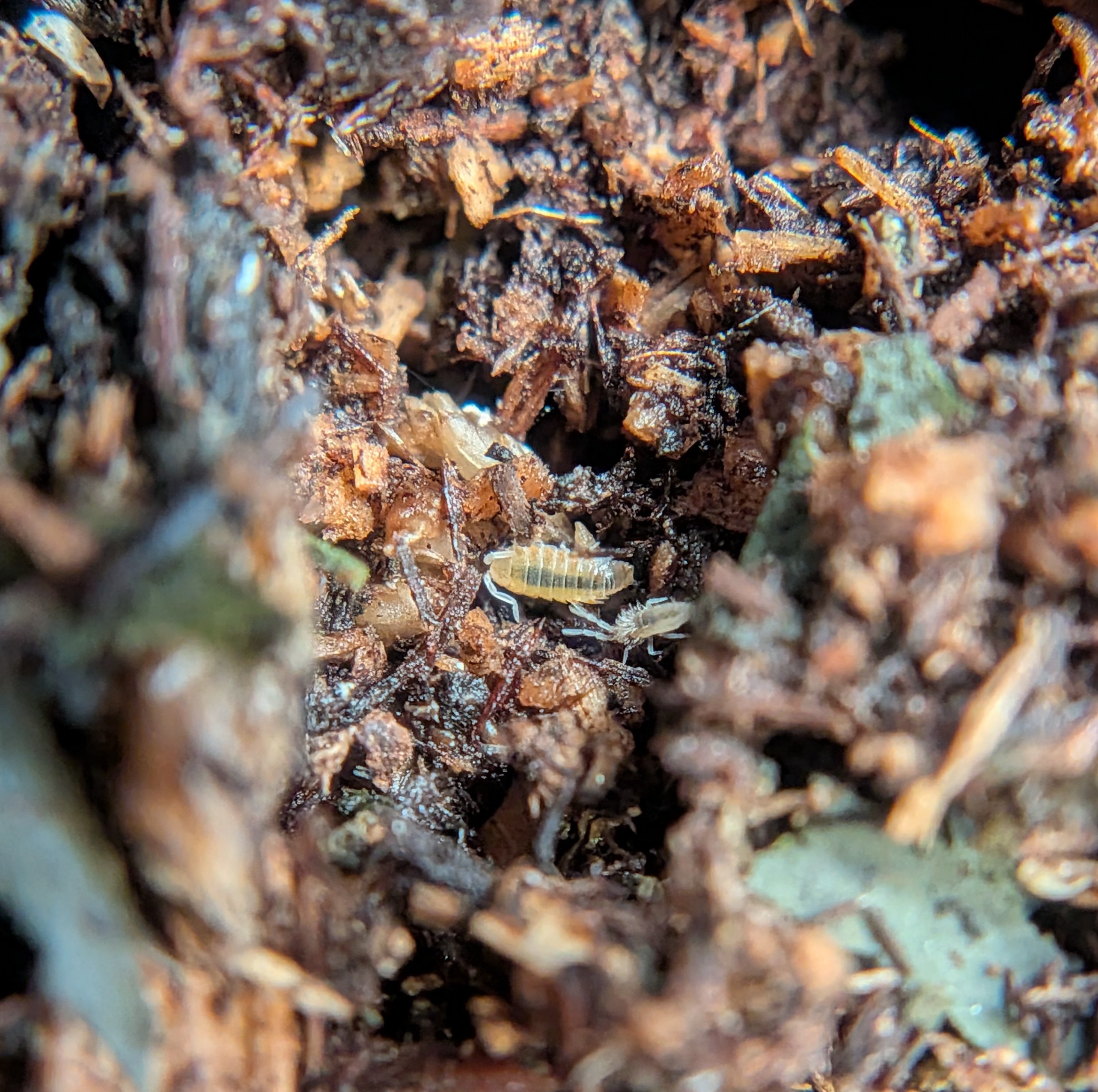
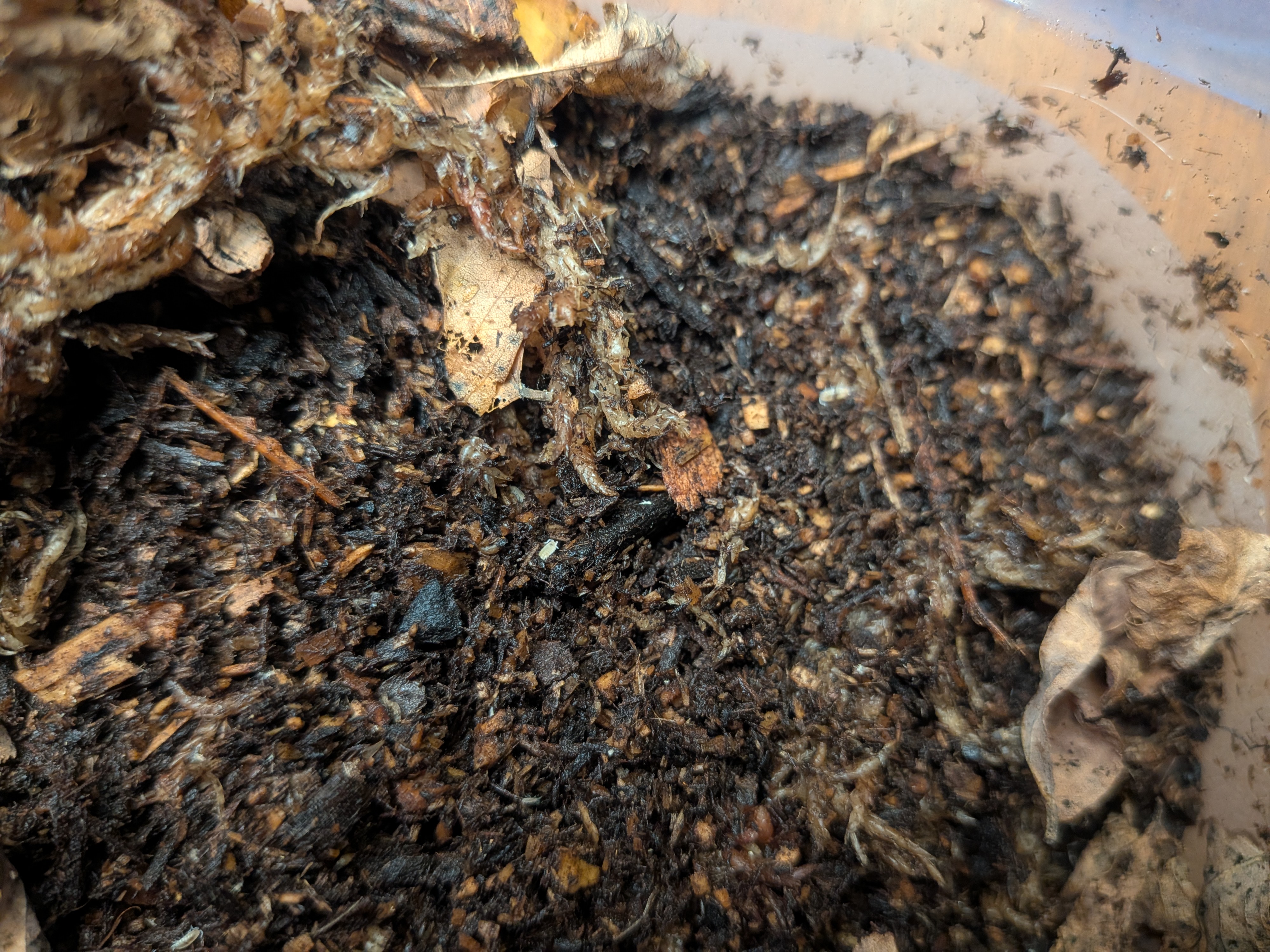
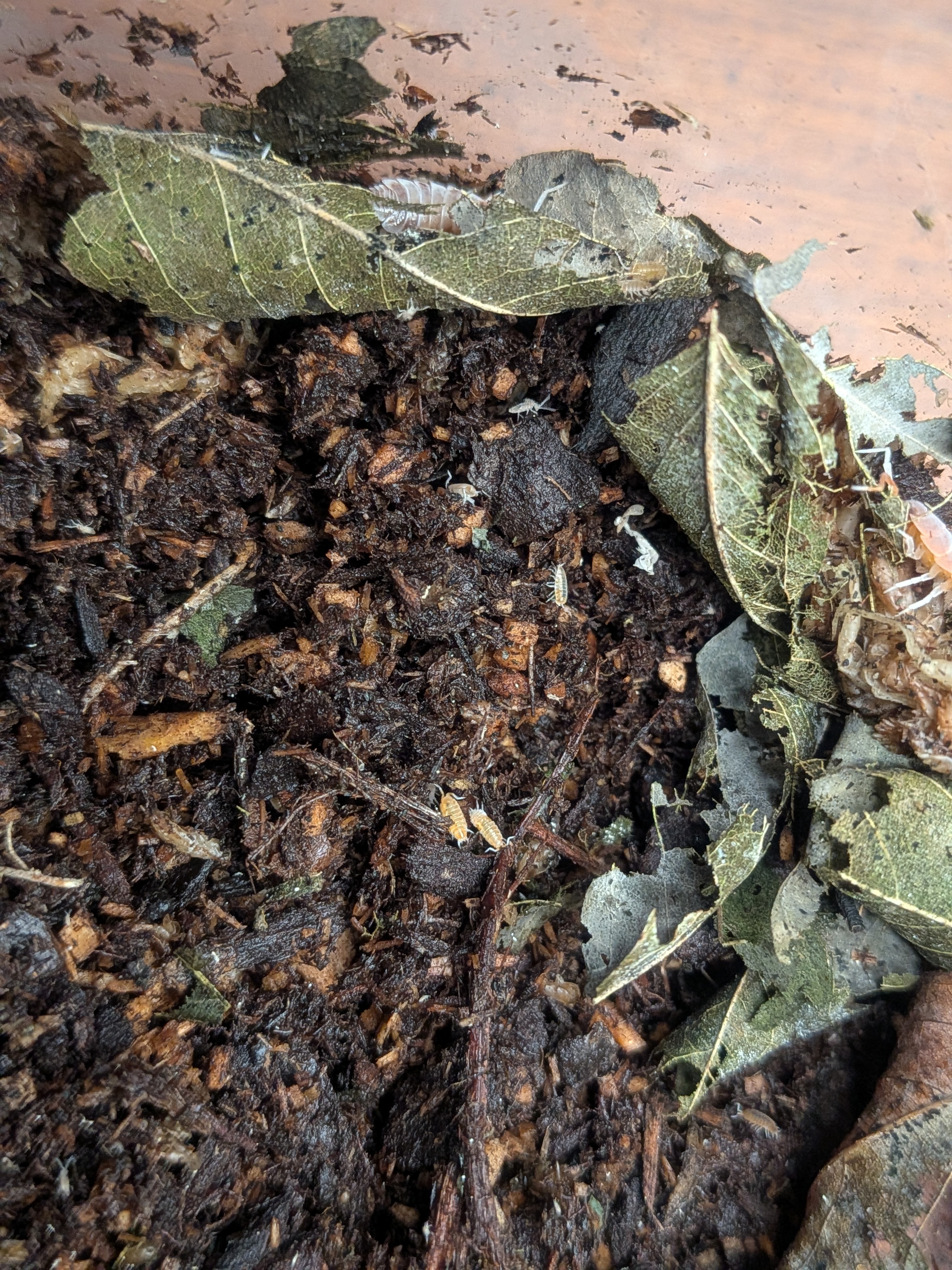
BIN 2: little surface activity, only 2 very young juveniles observed at a glance.BIN 1: 3x the observed babies as Bin 2. The juveniles are growing as expected. At least 6 shown above with 2 adults.
This is an awesome write up! I hadn’t seen it earlier. Did some cleanup in the community section and bam there it was.
Thank you for taking the time to out it together and can’t wait to see more.